FSCA-regulated forex brokers operate under the oversight of South Africa's Financial Sector Conduct Authority. This means they hold a Financial Services Provider (FSP) licence, requiring them to meet specific conduct standards and keep client funds separate from their operational capital. Traders should always verify a broker's FSP licence directly on the FSCA's official public register.
| Feature |
 Vantage Markets Vantage Markets
|
 Headway Headway
|
 Trade Nation Trade Nation
|
 CPT Markets UK CPT Markets UK
|
|---|---|---|---|---|
| Regulators | ASIC, FSCA, CIMA, FSC, VFSC | FSCA | FCA · ASIC · FSCA | FCA · FSCA · FSC · CMA |
| Founded | 2011 | 2022 | 2014 | 2008 |
| Execution | ECN, STP | ECN | ECN/STP | STP/ECN |
| Min Deposit | $50 | $1 | $0 | $20 |
| EUR/USD Spread | 1.4 pips | 0.7 pips | 0.5-0.6 pips | 1.4 pips |
| GBP/USD Spread | 1.6 pips | 0.7 pips | 0.8 pips | 1.2 – 1.8 pips |
| Gold Fee | 0.10 to 0.19 pips | 3.1 pips | 3 points | 0.0 pips |
| Platforms | MT4, MT5, Web, App, TradingView, CopyTrading | MT4, MT5, WebTrader, Mobile App, CopyTrading | TN Trader, MT4, TradingView | MT4, MT5 |
| Open Account Read review | Open Account Read review | Open Account Read review | Open Account Read review |
When you’re looking to trade forex in South Africa, choosing a broker regulated by the Financial Sector Conduct Authority (FSCA) is a smart move. This page covers what FSCA regulation means for you as a trader, detailing the protections it offers and how to verify a broker’s licence. We’ll help you understand the key aspects of trading under this regulatory framework.
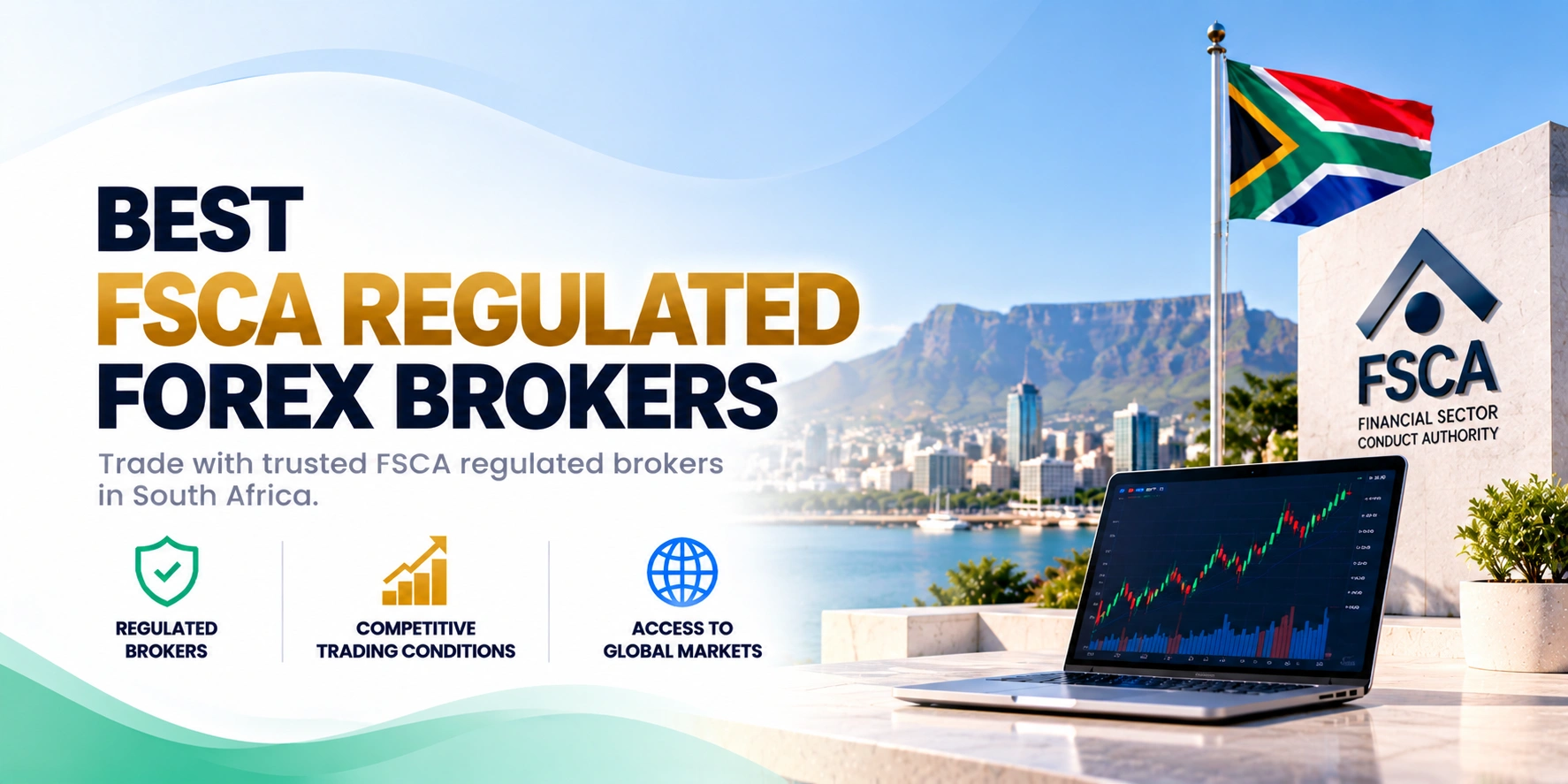
Before you open an account, it’s crucial to understand the specific rules and safeguards in place. You’ll want to check a broker’s licence status, their client fund policies, and any limitations on trading products or leverage. Knowing these details upfront can help you make an informed decision and trade with greater confidence.

HFM operates under a multi-regulatory framework, holding licenses from several authorities, including Tier 1 regulators like the FCA and CySEC. While this offers a strong layer of oversight, the lack of confirmed client fund segregation and the RBI Alert List warning are points to consider.…

FP Markets operates under the oversight of multiple financial authorities, providing a varied regulatory landscape for its global clientele. The broker holds licenses with Tier 1 regulators like ASIC and CySEC, alongside Tier 2 regulators such as FSCA and CMA Kenya, and a Tier 3…

Tickmill operates under a robust multi-regulatory framework, holding licenses from several reputable financial authorities. This extensive oversight, including Tier-1 regulators like the FCA and CySEC, provides a high level of client protection. The broker also segregates client funds and offers negative balance protection, reinforcing its…

Admirals operates under the supervision of several reputable financial authorities globally, offering a robust regulatory framework. This includes Tier-1 regulators like CySEC and FCA, alongside Tier-2 and Tier-3 licenses. Client funds are segregated, and negative balance protection is in place, enhancing overall safety for traders,…

AvaTrade operates under a robust multi-jurisdictional regulatory framework, holding licenses from numerous financial authorities globally. While it boasts a strong presence in Tier 1 and Tier 2 jurisdictions, it also holds licenses from Tier 3 regulators. Client funds are segregated, and negative balance protection is…
TradeQuo operates as a highly strategic, multi-jurisdictional brokerage group that successfully blends premium regional oversight with flexible offshore licensing to offer an optimal, multi-tiered trading environment. The group establishes deep institutional credibility through its regional entities, notably Tradequomarkets Financial Services L.L.C which is authorized and…

IUX operates under multiple regulatory bodies to ensure a secure trading environment for its global client base. The group holds licenses from reputable authorities including ASIC in Australia and the FSCA in South Africa. Retail clients are primarily onboarded under their FSC Mauritius entity, which…
Octa holds licenses from the Cyprus Securities and Exchange Commission (CySEC) and the Financial Sector Conduct Authority (FSCA) in South Africa. These regulations provide a framework for client protection, including segregated funds and negative balance protection. While its headquarters are in Saint Lucia, the operational…
WELTRADE operates under several legal entities with varying regulatory oversight. While Weltrade SA (Pty) Ltd is regulated by South Africa’s FSCA, other entities are registered in jurisdictions like Saint Vincent and the Grenadines and Saint Lucia. These registrations offer limited financial supervision for forex trading…
XTrend Speed is regulated by the Financial Sector Conduct Authority (FSCA) in South Africa, operating under Rynat Capital (Pty) Limited. While FSCA is a recognized financial authority, secondary sources like WikiFX and FastBull report significant regulatory warnings and unverified licenses, including revoked CySEC regulation. This…
FXTM operates under several regulatory bodies across different jurisdictions, providing a multi-regulated environment. Its primary entity, Exinity Limited, is regulated by the FSC in Mauritius, which is a Tier 3 regulator. Additional licenses from FSCA in South Africa and CMA in Kenya and UAE offer…

NAGA operates under several regulatory bodies, including CySEC in Europe, FSCA in South Africa, and FSA Seychelles for international clients. This multi-jurisdictional oversight provides varying levels of client protection depending on the specific entity. The broker segregates client funds and offers negative balance protection, enhancing…
Doto operates under multiple regulatory bodies, providing a varied level of oversight depending on the entity. Its global operations are overseen by the FSC in Mauritius and the FSA in Seychelles, which are considered Tier 3 regulators. Doto also holds licenses with the FSCA in…
The Financial Sector Conduct Authority (FSCA) is South Africa’s primary financial regulator. Its role is to oversee and supervise financial institutions across the country, including securities companies, insurance companies, investment advisors, asset managers, and, importantly, foreign exchange brokers. The FSCA ensures market integrity and protects financial customers by enforcing conduct standards.
When a forex broker holds an FSCA licence, specifically a Financial Services Provider (FSP) licence, it means they’ve met the authority’s requirements for operational conduct and financial stability. This licence covers the specific financial services they’re authorised to provide, such as currency transactions, stocks, bonds, and derivatives. Holding an FSP licence signifies that the broker is subject to ongoing supervision and must adhere to strict rules designed to protect clients.
The FSCA implements several measures to protect client funds and ensure market integrity. A core requirement is that FSCA-regulated brokers must keep client funds in segregated bank accounts. This means your trading capital is held separately from the broker’s own operating funds, which helps protect your money if the broker faces financial difficulties or insolvency.
However, it’s important to note some areas where specific protections are not confirmed. Our research indicates there is no confirmed information that the FSCA mandates negative balance protection for retail clients, nor is there a confirmed investor compensation scheme with a specified limit. Additionally, specific leverage limits for retail clients across different asset classes are not confirmed under FSCA regulation. Brokers are required to have enough funds and comply with anti-fraud and financial conduct rules, but traders should be aware of these specific unconfirmed protections.
The FSCA is South Africa’s Financial Sector Conduct Authority. It supervises financial institutions, including forex brokers, to ensure market integrity and protect financial customers. Brokers must hold an FSP licence to operate legally under its oversight.
Trading with an FSCA-regulated broker offers a layer of protection because these firms must comply with specific conduct rules. They’re required to segregate client funds, which helps protect your capital if the broker faces financial difficulties. Always verify a broker’s licence directly with the FSCA.
You can verify an FSCA broker’s licence through the Financial Service Provider (FSP) Search on the fsca.co.za website. Compare the FSP number and company name on the register with the details provided by the broker. Ensure the broker is authorised for foreign exchange trading.
There is no confirmed information that the FSCA currently operates an investor compensation scheme for retail forex traders. While some other regulators do, traders should be aware that this specific protection is not confirmed for FSCA-regulated entities.
Specific leverage limits for retail clients under FSCA regulation are not confirmed in our research. Unlike some other global regulators, the FSCA does not have publicly confirmed, explicit leverage caps per asset class. Always check a broker’s terms directly.
Our research does not confirm that the FSCA mandates negative balance protection for retail clients. While some brokers might offer it voluntarily, it’s not a confirmed regulatory requirement under the FSCA. Traders should clarify this directly with their chosen broker.
FSCA-regulated brokers must keep client funds in segregated bank accounts. This means your trading capital is held separately from the broker’s operational funds, providing a safeguard. This practice helps protect client money if the broker encounters financial difficulties.
The FSCA enforces conduct standards requiring clear and honest marketing, but there’s no confirmed information that it bans bonuses or other monetary inducements. Brokers must disclose all fees and ensure products are appropriate for the client. Always read terms carefully.