103 Brokers Reviewed
⚡ Updated daily — October 18, 2026
Advertisement
Advertisement
Advertisement
Advertisement
Advertiser disclosure: we may earn a commission if you open an account through links on this page. Our rankings follow our own review criteria; commissions do not decide them. How we review →

Best DFSA Regulated Forex Brokers in 2026

Published
Updated
Direct Answer

DFSA-regulated forex brokers are financial firms authorized by the Dubai Financial Services Authority (DFSA) to operate within the Dubai International Financial Centre (DIFC). This regulation ensures brokers adhere to strict financial and conduct rules, including client fund segregation and negative balance protection, aiming to safeguard traders' interests.

1
Top Rated
Pepperstone
Low spreads, multiple platforms, global regulation.
$0
Min dep.
0.0 Pips
Spread
1:1000
Leverage
MT4 MT5 ASIC ECN
2
Top Rated
HFM
Multi-regulated broker with diverse accounts and tools.
$0
Min dep.
0.0 Pips
Spread
1:2000
Leverage
MT4 MT5 FCA · CySEC · DFSA · FSCA ECN
3
Top Rated
CMC Markets
Established broker with vast instrument range.
$0
Min dep.
0.0 Pips
Spread
1:200
Leverage
MT4 MT5 FCA · ASIC · MAS Market Maker
4
Top Rated
XM
Diverse accounts and strong platform support
$5
Min dep.
0.0-2.0 pips
Spread
1:1000
Leverage
MT4 MT5 CySEC · FCA · DFSA · FSC Belize · FSC Mauritius ECN

Best DFSA Regulated Forex Brokers in 2026 — broker comparison
Feature Pepperstone HFM CMC Markets XM
Regulators ASIC, FCA, CySEC, BaFin, DFSA, CMA, SCB FCA · CySEC · DFSA · FSCA FCA · ASIC · MAS CySEC · FCA · DFSA · FSC Belize · FSC Mauritius
Founded 2010 2010 1989 2009
Execution ECN STP/ECN Market Maker NDD, STP
Min Deposit $0 $0 $0 $5
EUR/USD Spread 0.0 pips 1.8 pips 0.5 pips 1.6-2.0 pips
GBP/USD Spread 0.0 pips 1.6 pips 0.9 pips 0.9 pips
Gold Fee 0.08 pips $0.27 $0.35 0.12 USD/oz
Platforms MT4, MT5, cTrader, TradingView, CopyTrading MT4, MT5, HFM Platform, CopyTrading MT4, MT5, Web, Mobile, TradingView MT4, MT5, WebTrader, Mobile App, CopyTrading
Open Account Read review Open Account Read review Open Account Read review Open Account Read review

Trading forex or crypto with a DFSA-regulated broker means you’re operating under the oversight of the Dubai Financial Services Authority. This independent regulator ensures firms within the Dubai International Financial Centre (DIFC) adhere to strict financial and conduct standards, aiming to protect your interests as a trader.
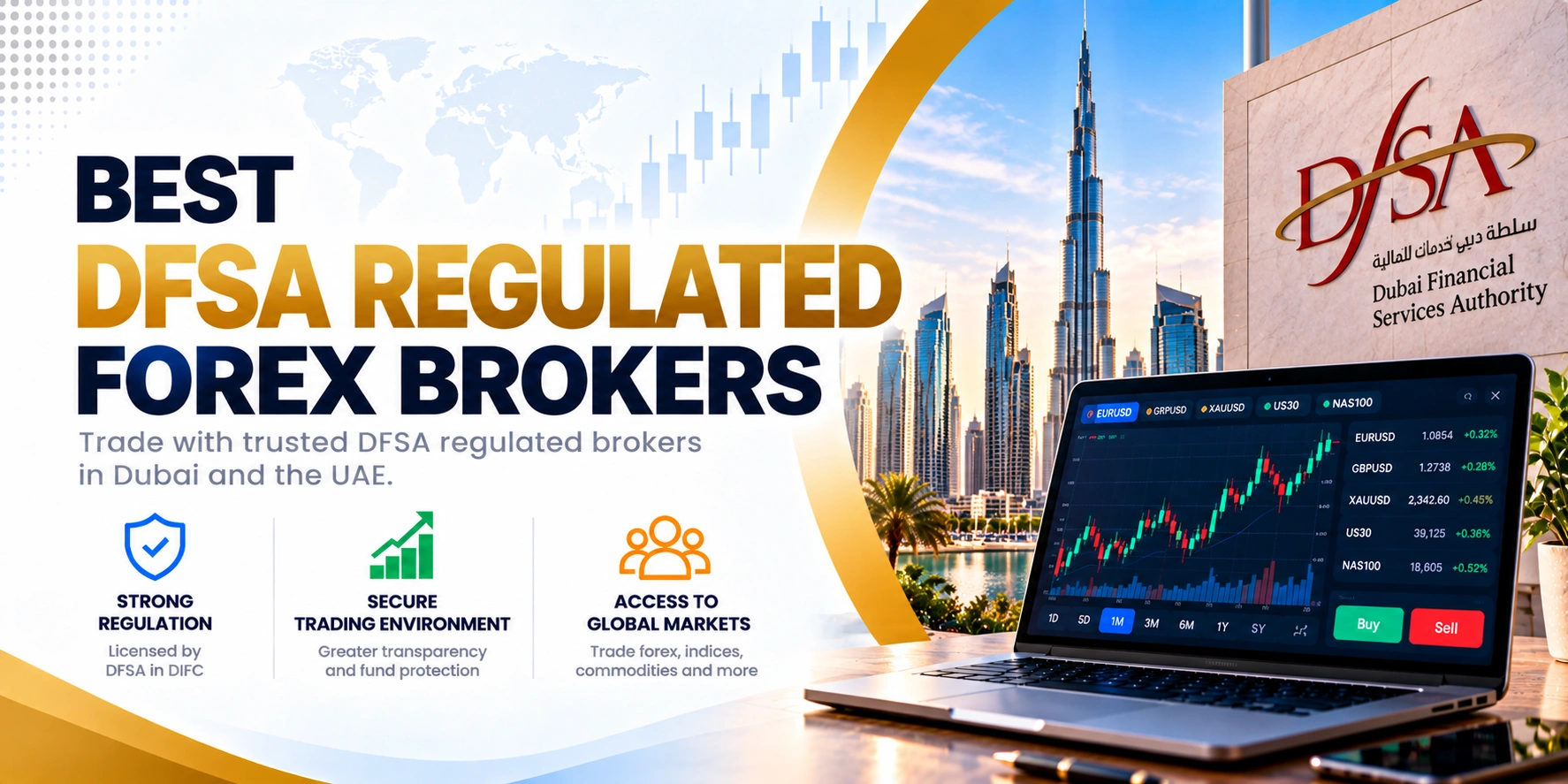
Before you open an account, it’s crucial to understand what DFSA regulation entails. You’ll want to check for client fund segregation, negative balance protection, and how to verify a broker’s license directly with the regulator. Knowing these details helps you make an informed decision about where to trade.
Best DFSA Regulated Forex Brokers in 2026

TradeQuo Global LtdTop Rated
Your Modern Gateway to Global Markets
MT4 MT5 TradingView SCA UAE FSA Seychelles ECN STP
4.7
118 reviews
$1Min deposit
0.0 PipsSpread (pips)
UnlimitedMax leverage
85msAvg execution

Pros

  • Very competitive raw spreads
  • Fast deposits and withdrawals
  • Powerful MetaTrader 5 platform

Cons

  • Limited educational resources
Our take

TradeQuo operates as a highly strategic, multi-jurisdictional brokerage group that successfully blends premium regional oversight with flexible offshore licensing to offer an optimal, multi-tiered trading environment. The group establishes deep institutional credibility through its regional entities, notably Tradequomarkets Financial Services L.L.C which is authorized and…

SwissquoteTop Rated
Swiss-regulated bank with diverse instruments.
CFXD TradingView MetaTrader 4 FINMA · FCA · CySEC ECN
5.0
1 review
$1,000Min deposit
1.7 PipsSpread (pips)
1:100Max leverage
9msAvg execution

Pros

  • Multiple top-tier regulations
  • Wide range of trading instruments
  • Swiss banking license

Cons

  • High minimum deposit for accounts
  • Limited platform information
Our take

Swissquote operates under a robust multi-regulatory framework, holding licenses from several top-tier authorities globally. This includes regulation by FINMA in Switzerland, the FCA in the UK, and CySEC in Cyprus, among others. The presence of a Swiss banking license for Swissquote Bank Ltd adds a…

IG GroupTop Rated
Global multi-asset broker with strong regulation
IG Platform MT4 MT5 FCA · ASIC · FINMA · MAS DMA Market Maker
5.0
1 review
£1Min deposit
0.6 PipsSpread (pips)
1:200Max leverage
14ms – 89msAvg execution

Pros

  • Extensive global regulation
  • Wide range of platforms
  • Diverse tradable instruments

Cons

  • Some regulatory warnings
  • No Islamic account option
Our take

IG operates under a robust regulatory framework, holding licenses from multiple top-tier authorities like the FCA, ASIC, and FINMA. This broad oversight ensures client fund segregation and negative balance protection for retail traders. While the regulatory landscape is strong, recent warnings and class actions highlight…
Axi
Award-winning broker with competitive pricing
MT4 MT5 WebTrader FCA · ASIC ECN
5.0
1 review
$5Min deposit
0.0 PipsSpread (pips)
1:500Max leverage
ECNAvg execution

Pros

  • Tight spreads from 0.0 pips
  • Strong global regulation
  • Advanced MT4/MT5 platforms

Cons

  • Limited instrument range
  • No cTrader platform
Our take

Axi holds licenses from several reputable financial authorities globally, ensuring a secure trading environment for its clients. The broker operates under strict regulatory oversight, providing significant client protections such as segregated funds and negative balance protection. This multi-jurisdictional regulation reinforces Axi’s commitment to transparency and…

TickmillTop Rated
Low-cost trading with strong regulation
MT4 MT5 TradingView FCA · CySEC · FSCA ECN STP
5.0
1 review
$100Min deposit
0.0 PipsSpread (pips)
1:1000Max leverage
20msAvg execution

Pros

  • Strong multi-jurisdictional regulation
  • Very low spreads on Raw accounts
  • Negative balance protection for clients

Cons

  • Limited explicit instrument range
  • Payment methods and fees not fully disclosed
Our take

Tickmill operates under a robust multi-regulatory framework, holding licenses from several reputable financial authorities. This extensive oversight, including Tier-1 regulators like the FCA and CySEC, provides a high level of client protection. The broker also segregates client funds and offers negative balance protection, reinforcing its…

What Is the Dubai Financial Services Authority (DFSA)?

The Dubai Financial Services Authority (DFSA) is the independent financial regulator for the Dubai International Financial Centre (DIFC) in the United Arab Emirates (UAE). It’s not just a general UAE regulator; its jurisdiction is specifically within the DIFC, a purpose-built financial free zone. The DFSA’s official website is www.dfsa.ae.

The DFSA supervises a broad range of financial services, including asset management, banking, investment advice, Islamic finance, insurance, financial technology, crypto, and capital markets. For forex brokers, holding a DFSA license, also known as DIFC authorization, is mandatory. Specifically, a DFSA Category 4 license is required for firms dealing in investments as an agent or matched principal, which covers most forex brokerage activities.

Benefits and Limitations of DFSA Regulated Brokers

Benefits

  • Client Fund Segregation: DFSA-supervised firms must segregate client funds from their own company assets. This is a critical protection, ensuring your money isn’t used for the broker’s operational expenses and is protected if the firm faces financial difficulties.
  • Negative Balance Protection: For retail clients trading leveraged products, the DFSA requires negative balance protection. This means your potential losses are limited to the funds in your trading account, preventing you from owing the broker more than you’ve deposited due to market volatility.
  • Robust Capital Requirements: The DFSA enforces strict prudential frameworks, requiring brokers to maintain capital resources that always exceed their capital requirements. These capital levels must be proportionate to the firm’s scale and risk profile, enhancing financial stability.
  • Comprehensive Oversight: The DFSA supervises a wide array of financial activities and is also responsible for enforcing anti-money laundering (AML) and counter-terrorist financing (CTF) requirements. This broad oversight contributes to a more secure and transparent trading environment.

Limitations

  • No Confirmed Investor Compensation Scheme: While the DFSA prioritizes investor protection, our research did not confirm a specific investor compensation scheme or its limits. Traders should be aware that direct compensation for broker insolvency may not be available through a dedicated fund.
  • Unconfirmed Leverage Limits: We couldn’t verify specific, exact leverage limits per asset class for retail clients under DFSA regulation. This means leverage offerings might vary between brokers, and you’ll need to check with individual firms.
  • No Confirmed Restrictions on Bonuses or Marketing: Our research did not confirm any specific restrictions on bonuses or marketing practices for DFSA-regulated brokers. Traders should exercise caution and thoroughly understand the terms and conditions of any promotional offers.

How to Choose the Right Broker

  • Verify the DFSA Licence: Always confirm the broker’s license directly on the DFSA’s Public Register. Ensure the licensed entity name and reference number match what the broker provides.
  • Understand Trading Costs: Look into spreads, commissions, overnight financing fees (swaps), and any non-trading fees like inactivity or withdrawal charges. Transparent pricing is key.
  • Evaluate Trading Platforms: Check if the broker offers platforms that suit your trading style, such as MetaTrader 4 (MT4), MetaTrader 5 (MT5), cTrader, or a proprietary web platform. Assess their features, tools, and ease of use.
  • Review Funding and Withdrawal Options: Confirm the available deposit and withdrawal methods, processing times, and any associated fees. Reliable and efficient transactions are crucial.
  • Assess Customer Support: Good customer service is vital. Check their availability (24/5 or 24/7), contact methods (phone, email, live chat), and language support.
  • Explore Account Types: Consider the different account types offered, such as Standard, ECN, or Islamic accounts, and their minimum deposit requirements, features, and suitability for your trading volume and experience level.

Investor Protection and Client Funds

The DFSA places a high priority on the protection of client assets, which includes client money, investments, and crypto tokens. Firms under DFSA supervision are strictly required to segregate client funds from their own operational capital. This means your trading capital is held in separate bank accounts, distinct from the broker’s assets, providing a layer of security should the firm encounter financial difficulties. The specific rules for client money and safe custody are detailed in the DFSA Rulebook, particularly within the Conduct of Business Module.

For retail clients trading leveraged products, the DFSA mandates negative balance protection. This important rule limits a retail client’s liability for all restricted speculative investments to the funds available in their trading account, provided the authorized firm acts as a principal. This protection helps prevent traders from incurring debts beyond their initial deposit. While the DFSA actively works to protect investors and maintain the integrity of the DIFC financial system, our research did not confirm the existence of a specific investor compensation scheme or its limits. The DFSA’s prudential framework also requires authorized firms to maintain robust capital resources, proportionate to their activities, further safeguarding the financial stability of regulated entities.

How to Verify a Broker’s Licence

  1. Access the Official DFSA Public Register: Navigate directly to the DFSA’s official website at www.dfsa.ae. From there, locate the ‘Public Register’ section, specifically for firms, at www.dfsa.ae/public-register/firms. Avoid using links provided by the broker or third-party sites, as these could be fraudulent.
  2. Search for the Broker’s Name: Use the search function on the Public Register to look up the exact name of the licensed entity that the broker claims to operate under. This name should typically be found in the broker’s ‘About Us’ section or legal disclosures.
  3. Review the Entry Details: The Public Register entry for a firm will display important information, including its registered address, the date of registration, key individuals within the organization, and any history of regulatory actions. It will also show the firm’s unique DFSA reference number.
  4. Compare Information Carefully: Cross-reference all details found on the DFSA’s Public Register with the information presented on the broker’s website. Pay close attention to the licensed entity name and the DFSA reference number; any discrepancies are a major red flag.
  5. Confirm Licence Category: Ensure the broker holds the appropriate license category for the services they offer. For forex trading, a DFSA Category 4 license is typically required. If a firm claims to offer forex trading but holds a different category, proceed with caution.
  6. Be Wary of Clone Firms: The DFSA has issued warnings about ‘clone’ firms that impersonate legitimate, authorized entities. Always double-check the website domain and contact details against the official register. If something feels off, it likely is.

Risks and Common Mistakes

  • Falling for Clone Firms: One of the most significant risks is encountering a ‘clone firm’ – an unauthorized entity that mimics a legitimate, DFSA-regulated broker. Always verify the license directly on the official DFSA Public Register, accessing it from the DFSA’s main website.
  • Not Verifying the Licence: Failing to confirm a broker’s regulatory status is a common and costly mistake. An unregulated broker offers no protection, and your funds are at significant risk. Don’t just take a broker’s word for it; check the register yourself.
  • Ignoring Terms and Conditions: Many traders overlook the fine print, especially regarding bonuses, withdrawals, and account inactivity fees. Always read the full terms and conditions before committing any funds.
  • Over-Leveraging: While DFSA regulation includes negative balance protection, trading with excessive leverage can still lead to rapid and substantial losses. Understand the risks associated with leverage and manage your exposure carefully.
  • Lack of Risk Management: Trading without a solid risk management strategy is a recipe for disaster. Always use stop-loss orders, manage your position sizes, and never risk more capital than you can afford to lose.
  • Believing in Guaranteed Profits: No trading activity offers guaranteed profits, regardless of the regulator. Be highly skeptical of any broker or individual promising unrealistic returns or ‘risk-free’ trading. Trading inherently involves risk.

Frequently Asked Questions

What is DFSA regulation for forex brokers?

DFSA regulation means a forex broker holds a license from the Dubai Financial Services Authority, allowing them to operate within the Dubai International Financial Centre. This oversight ensures the broker complies with robust financial and operational standards, including holding a mandatory DFSA Category 4 license for forex activities.

Is DFSA regulation safe for traders?

DFSA regulation offers a strong level of safety for traders. It mandates client fund segregation, meaning your money is kept separate from the broker’s operational capital. Additionally, it requires negative balance protection for retail clients, limiting your liability to funds in your trading account for leveraged products.

Does the DFSA offer an investor compensation scheme?

Our research did not confirm the existence of a specific investor compensation scheme or its limit under DFSA regulation. The DFSA prioritizes investor protection and maintaining financial system integrity within the DIFC, but traders should always verify specific compensation details directly with the regulator or their chosen broker.

How can I verify a DFSA forex broker's license?

You can verify a DFSA license by checking the official Public Register on the DFSA’s website, www.dfsa.ae/public-register/firms. Compare the broker’s stated license details, including the entity name and reference number, against the information listed on the register. Always access the register directly from the DFSA’s official domain to avoid cloned sites.

What are the DFSA's capital requirements for brokers?

The DFSA requires authorized firms to maintain capital resources that consistently exceed their capital requirement, proportionate to their activities. For a Category 4 license, typically held by forex brokers, the base capital requirement is USD 30,000. Higher categories have significantly larger base capital requirements, ensuring financial stability.

Does the DFSA provide negative balance protection for retail clients?

Yes, negative balance protection is a DFSA requirement for firms offering leveraged products to retail clients. This means a retail client’s liability for trading-related debt on restricted speculative investments is limited to the funds in their trading account. This protection does not extend to professional traders.

Are there leverage limits for DFSA-regulated forex brokers?

Our research did not confirm specific, exact leverage limits per asset class for retail clients under DFSA regulation. While the DFSA supervises leveraged products, traders should consult their chosen DFSA-regulated broker directly for current leverage offerings and any applicable restrictions.

What are common DFSA warnings for investors?

The DFSA frequently issues alerts regarding scams, including ‘Unauthorised,’ ‘Clone,’ and ‘Regulator or Authority impersonation’ warnings. They specifically caution against cloned websites that mimic the official Public Register. Always verify a firm’s authorization directly on the official DFSA website and be wary of unsolicited offers.

Sadia Rahman
Lead Broker Review Writer · Forexdailyinfo.com

Sadia Rahman writes Forex brokers guides with strict editorial precision, cross-referencing all data, regulations, and broker claims directly against primary sources.

30 articles written On the team since 2018
Weby Markets 100% Deposit Bonus