The best CFTC-regulated forex brokers combine appropriate U.S. regulatory registration, transparent pricing, reliable execution, competitive trading costs, strong platforms, and suitable account conditions. U.S. traders should verify the broker's legal entity through the CFTC and NFA before opening an account.
The Commodity Futures Trading Commission (CFTC) and the National Futures Association (NFA) operate the most stringent regulatory framework for forex trading in the world. If you’re based in the United States or want to trade with a US-regulated broker, trading with a CFTC and NFA regulated forex broker is the gold standard for safety and legal protection.
When you trade forex through a CFTC and NFA regulated broker, your funds are segregated from the broker’s operating capital, strict leverage limits protect you from catastrophic losses, and regular audits ensure the broker maintains adequate capital reserves. This guide walks you through the best CFTC and NFA regulated forex brokers operating in 2026, explains what this regulation actually means, and shows you how to verify a broker’s genuine registration status before depositing a single dollar.
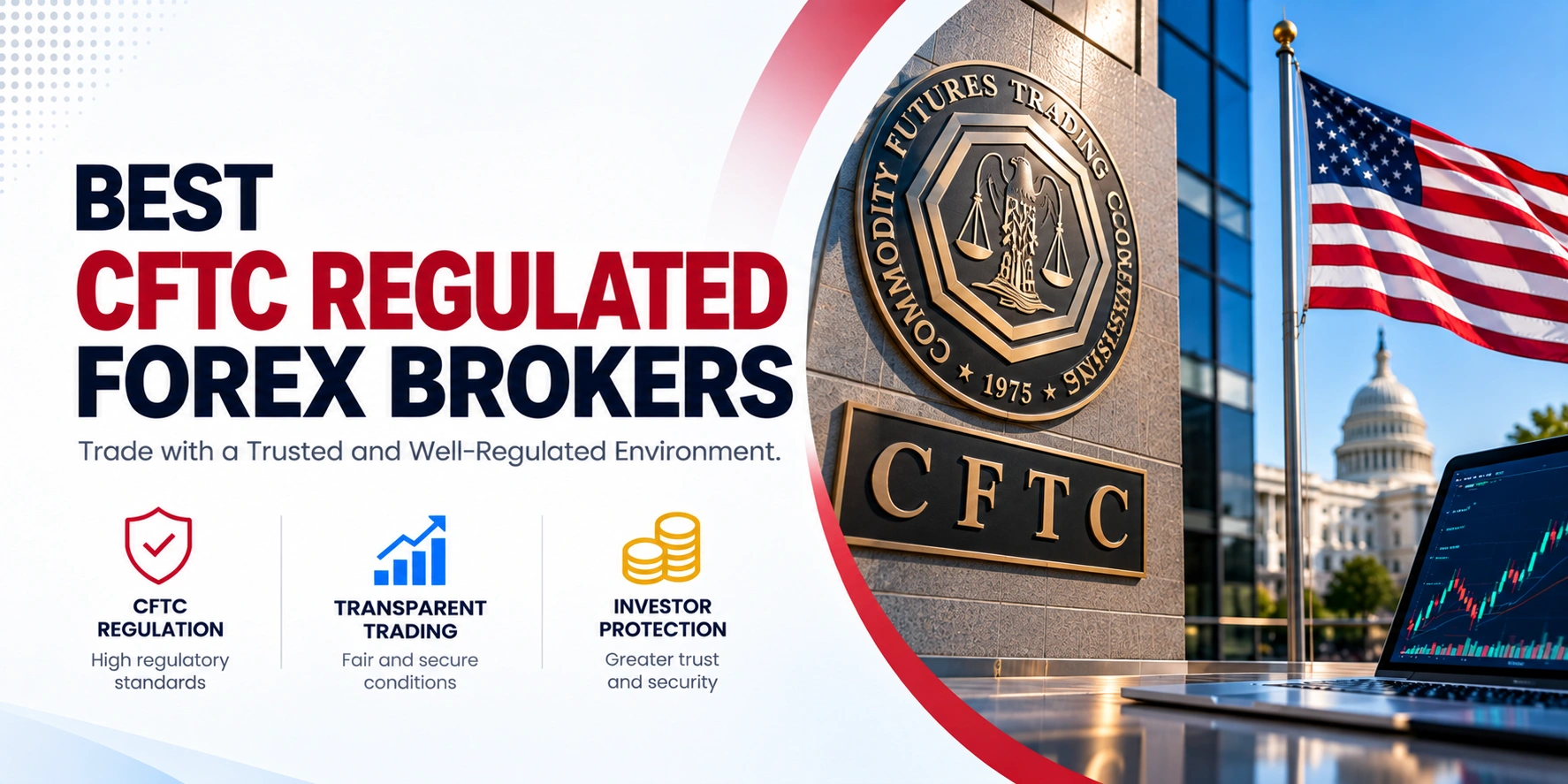

Trading with a CFTC and NFA regulated forex broker offers four critical advantages that unregulated alternatives simply cannot match.
CFTC regulations require that all customer deposits be segregated from the broker’s own operating funds. This means if your broker faces insolvency or bankruptcy, your trading account funds are protected in a separate custodial account and cannot be used to pay the broker’s debts or business obligations. Unregulated brokers operate under no such requirement and have been known to comingle client funds with company money, leading to total loss when the firm collapses.
The CFTC enforces maximum leverage limits for retail forex traders. As of 2026, retail traders in the United States are capped at 50:1 leverage for major currency pairs like EUR/USD and GBP/USD, with even stricter limits (20:1) on minor pairs and exotic currencies. These caps are designed to prevent retail traders from wiping out their entire account on a single bad trade. Unregulated brokers often offer 500:1 leverage or higher, a setup engineered to blow up accounts quickly and enrich the broker through failed trades.
The NFA, acting on behalf of the CFTC, requires all registered Forex Dealer Members (FDMs) to maintain minimum net capital levels typically several million dollars and undergo regular financial audits to verify compliance. These audits happen throughout the year and are designed to catch problems before a broker becomes insolvent. Unregulated brokers have no such oversight and often operate on razor-thin capital reserves or with funds sourced from questionable origins.
If you have a dispute with a CFTC and NFA regulated broker, you have access to formal complaint procedures, ombudsman services, and potential arbitration through the NFA’s disciplinary and enforcement framework. The NFA maintains a public record of all complaints, violations, and disciplinary actions taken against its members. This transparency allows you to research a broker’s history before opening an account. Unregulated brokers offer no such recourse and disappear overnight when fraud is uncovered.
The CFTC (Commodity Futures Trading Commission) is a federal agency created under the Commodity Exchange Act and holds authority over all derivatives trading in the United States, including forex. However, the CFTC delegates day-to-day registration and examination of forex brokers to the NFA (National Futures Association), a self-regulatory organization (SRO) that operates under CFTC supervision.
For a broker to legally offer forex trading services to US customers, it must be registered with the CFTC and be a member of the NFA. The NFA issues different registration categories depending on what the broker does:
Futures Commission Merchant (FCM): A broker that accepts customer funds and executes trades on behalf of clients. This is the most common registration type for retail forex brokers.
Retail Foreign Exchange Dealer (RFED): A broker that offers retail off-exchange forex contracts directly to customers as counterparty. RFEDs must also register with the CFTC and comply with NFA bylaws.
Introducing Broker (IB): An entity that solicits orders for futures and forex but does not accept customer funds. IBs must still register with the NFA but have fewer capital requirements than FCMs or RFEDs.
All forex brokers registered in these categories must comply with Part 30 of the CFTC’s regulations, which govern the offer and sale of forex contracts to US-based customers. This includes mandatory fund segregation, leverage limits, anti-money laundering (AML) policies, regular financial reporting, and adherence to NFA Bylaw 306, which sets out specific operational and compliance requirements for forex dealers.
Leverage allows traders to control a larger position with a smaller amount of capital.
However, U.S. retail forex leverage is subject to regulatory limits. For major currency pairs, the applicable security-deposit requirement is generally 2%, equivalent to 50:1 maximum leverage, while other currency pairs can be subject to higher margin requirements.
Choosing a CFTC Regulated Forex Broker is an important consideration for traders in the United States. Regulation, NFA membership, transparent pricing, reliable execution, trading platforms, and account conditions should all be evaluated before opening an account.
Most importantly, verify the broker’s actual legal entity and registration status through official CFTC and NFA resources rather than relying solely on marketing claims. The CFTC recommends checking registration and disciplinary history before depositing funds.
The CFTC is the U.S. federal regulator responsible for overseeing relevant derivatives markets, including certain retail forex activities.
An RFED is a Retail Foreign Exchange Dealer that acts, or offers to act, as a counterparty to certain off-exchange retail foreign currency transactions.
Registered RFEDs are required to be NFA members.
Some offshore firms may solicit U.S. customers, but traders can have fewer protections when dealing with firms that are not properly registered.
U.S. retail forex leverage is subject to regulatory margin requirements and is generally lower than leverage advertised by many offshore brokers.
Some U.S. forex brokers offer MT4, while others use MT5 or proprietary platforms.