The best forex brokers are regulated brokers that offer tight spreads, low fees, fast execution and reliable platforms like MetaTrader 4, MetaTrader 5 and TradingView. Our 2026 list compares brokers on regulation, trading costs, platforms, deposits and withdrawals, and customer support to help you choose one that fits how you trade.
| Feature |
 IUX Markets Ltd IUX Markets Ltd
|
 FBS FBS
|
 Gerchik & Co Gerchik & Co
|
 Vantage Markets Vantage Markets
|
|---|---|---|---|---|
| Regulators | ASIC · FSCA · FSC | FSC · CySEC · ASIC | VFSC · FSC Mauritius | ASIC, FSCA, CIMA, FSC, VFSC |
| Founded | 2016 | 2009 | 2015 | 2011 |
| Execution | ECN/STP | STP | STP | ECN, STP |
| Min Deposit | $10 | $1 | $10 | $50 |
| EUR/USD Spread | 0.8 pips | 0.9 pips | 1.0 pips | 1.4 pips |
| GBP/USD Spread | 0.2 pips | 1.2 pips | 0.4 pips | 1.6 pips |
| Gold Fee | $0.18 | 0.12 points | $10 | 0.10 to 0.19 pips |
| Platforms | MT5, IUX WebTrader, IUX Trade App, MT4 | MT4, MT5, WebTrader, FBS App, CopyTrading | MT4, MT5, CopyTrading | MT4, MT5, Web, App, TradingView, CopyTrading |
| Open Account Read review | Open Account Read review | Open Account Read review | Open Account Read review |
Choosing the right broker can make all the difference in your forex trading journey. Best forex brokers combine regulation, competitive spreads, fast execution, and reliable trading platforms to give you a safe and efficient trading experience. Whether you’re a beginner learning the ropes or an experienced trader seeking advanced tools, picking a trustworthy broker is crucial.
To help you make an informed decision, we’ve put together a list of the best Forex brokers available. Our list is based on several factors, including regulation, trading platforms, fees, and customer support.
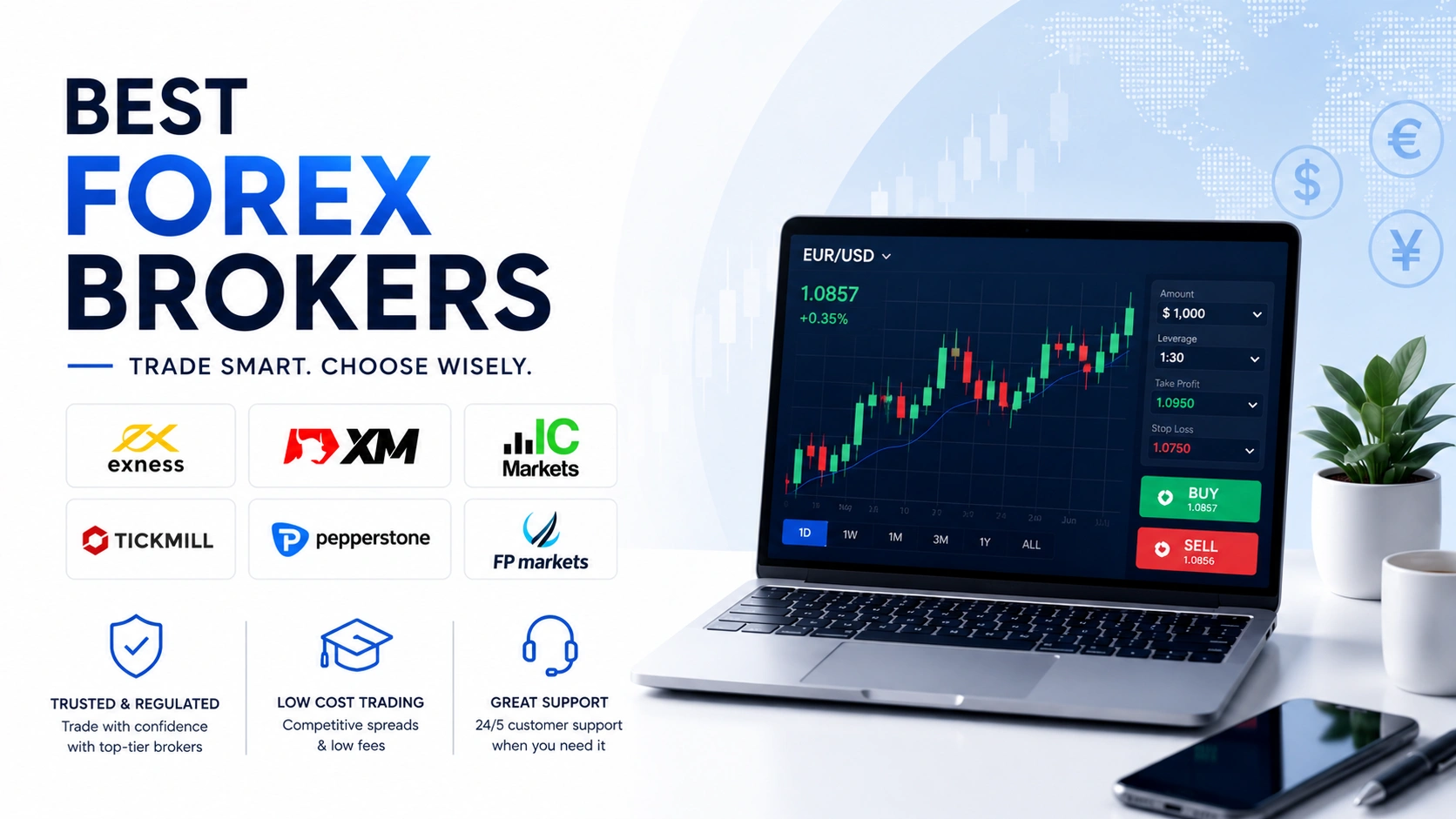
Regulation is an essential factor to consider when choosing a Forex broker. Regulated Forex brokers operate under strict rules and regulations, which help protect traders from fraud and other unethical practices. The top Forex brokers on our list are regulated by respected authorities such as the Financial Conduct Authority (FCA) in the UK, the Australian Securities and Investments Commission (ASIC), and the US National Futures Association (NFA).

Headway operates under the authorisation of South Africa’s Financial Sector Conduct Authority, a tier-2 regulator that enforces strict AML and KYC standards but doesn’t offer retail investor compensation. The broker segregates client funds in separate accounts and provides negative balance protection, which adds meaningful safety…

Eightcap operates under the oversight of several financial authorities, providing a multi-jurisdictional regulatory framework. Its primary licenses from the FCA in the UK and ASIC in Australia are considered top-tier, offering robust client protections. Client funds are segregated, and Negative Balance Protection is available for…

HFM operates under a multi-regulatory framework, holding licenses from several authorities, including Tier 1 regulators like the FCA and CySEC. While this offers a strong layer of oversight, the lack of confirmed client fund segregation and the RBI Alert List warning are points to consider.…

RoboForex operates under two main legal entities: RoboForex Ltd, regulated by the Financial Services Commission (FSC) of Belize, and RoboMarkets Deutschland GmbH, regulated by BaFin in Germany. While the FSC Belize offers a Tier 3 regulatory framework, the presence of a BaFin-regulated entity provides stronger…
XTB operates under the oversight of several financial authorities, including the Financial Conduct Authority (FCA) in the UK and the Cyprus Securities and Exchange Commission (CySEC). These Tier-1 regulations provide significant client protections, such as segregated funds and negative balance protection for retail clients in…

Trade Nation operates under the oversight of several reputable financial authorities, including the UK’s FCA and Australia’s ASIC, which are considered top-tier regulators. This multi-jurisdictional licensing provides a robust framework for client protection, including segregated funds and negative balance protection for retail clients. While some…
Pepperstone operates under the oversight of several reputable financial authorities globally, including ASIC, FCA, and CySEC. This multi-jurisdictional regulation provides a strong framework for client protection, with segregated funds and negative balance protection for retail clients. While generally considered safe, traders should be aware of…
CPT Markets UK operates under several regulatory bodies, offering a multi-jurisdictional approach to its services. Its primary entity, CPT Markets UK Limited, is regulated by the Financial Conduct Authority (FCA) in the UK, a top-tier regulator known for stringent oversight. However, it’s important to note…
Capital.com operates under a robust multi-regulatory framework, holding licenses from several reputable financial authorities globally. This diverse regulatory presence offers varying levels of client protection depending on the specific entity you trade with. While some entities provide strong safeguards like compensation schemes, others, particularly in…

NAGA operates under several regulatory bodies, including CySEC in Europe, FSCA in South Africa, and FSA Seychelles for international clients. This multi-jurisdictional oversight provides varying levels of client protection depending on the specific entity. The broker segregates client funds and offers negative balance protection, enhancing…
zForex operates under the regulation of the Mwali International Services Authority (MISA) in Saint Vincent and the Grenadines. This is a Tier 3 offshore regulator, which generally provides less stringent oversight and fewer client protections compared to Tier 1 authorities. Our research did not confirm…

Swissquote operates under a robust multi-regulatory framework, holding licenses from several top-tier authorities globally. This includes regulation by FINMA in Switzerland, the FCA in the UK, and CySEC in Cyprus, among others. The presence of a Swiss banking license for Swissquote Bank Ltd adds a…

Exness operates under multiple tier-one regulatory licenses including CySEC in Cyprus, the FCA in the United Kingdom, and the FSA in Seychelles. Client funds are held in segregated accounts with top-tier banks, and negative balance protection is offered to retail clients in regulated jurisdictions. The…
A forex broker is a company that gives retail traders access to the currency market through a trading platform. When you place a trade, the broker passes it to a liquidity provider or takes the other side of it, and earns money through spreads, commissions or both. Choosing a broker matters because it affects your trading costs, the safety of your funds and how well your orders are executed.
Brokers differ in how they handle your orders:
ECN brokers route orders to a network of liquidity providers. They typically offer raw spreads and charge a commission per lot.
STP brokers pass orders straight to liquidity providers with no dealing desk. Spreads are usually variable and built into the price.
Market makers set their own prices and can take the opposite side of your trade. Spreads are often fixed, and there may be a conflict of interest.
None of these is automatically best. Compare total cost and execution quality for the way you trade. See our list of STP forex brokers for examples.
The advertised spread rarely tells the whole story. Add up these costs before you choose:
Comparing forex brokers can be overwhelming, but there are a few key factors that you can look at to help you make an informed decision. Here are some important considerations when comparing forex brokers:
Regulation: One of the most important factors to consider when choosing a forex broker is whether they are regulated by a reputable regulatory agency. This can include agencies such as the Financial Conduct Authority (FCA), the National Futures Association (NFA), or the Australian Securities and Investments Commission (ASIC).
Trading Platform: Another important factor is the trading platform offered by the broker. You should look for a platform that is user-friendly, has a variety of trading tools and indicators, and provides real-time market data.
Spreads and Fees: Different brokers will have different spreads and fees, so it’s important to compare these costs across different brokers. Some brokers may offer lower spreads and fees but charge a commission on trades, while others may have higher spreads but no commission.
Deposit and Withdrawal Options: You should also consider the deposit and withdrawal options offered by the broker. Look for a broker that offers a variety of payment methods, including credit/debit cards, bank transfers, and e-wallets.
Customer Support: Finally, you should consider the quality of customer support offered by the broker. Look for a broker that provides support through multiple channels (such as phone, email, and live chat), and has knowledgeable and responsive customer support agents.
Overall, the best way to compare forex brokers is to do your research, read reviews, and consider your own trading needs and preferences.
The best forex broker is the one that is regulated, keeps total trading costs low and fits your trading style. Our 2026 list is led by TradeQuo, FBS, IUX, Weby Markets and Gerchik & Co. Each offers low minimum deposits and MetaTrader or proprietary platforms, but they differ in regulation, spreads and leverage.
Regulation varies a lot across this list. Some brokers hold tier-1 or tier-2 licenses, while others are regulated offshore, which usually means fewer investor protections. Check the license number on the regulator’s official register before you deposit, and confirm that the entity serving your country is the licensed one.
Open a demo account first, then start with a small deposit and test a withdrawal early. Read our full reviews or use Find My Broker to shortlist brokers that match how you trade.
Check regulation first, then compare total trading costs (spread plus commission), available platforms, deposit and withdrawal methods, and customer support. Also confirm the broker accepts clients from your country. Opening a demo account lets you test execution and platform quality before you deposit real money.
Find the license number on the broker’s website, then search for it on the regulator’s official public register, such as the FCA, ASIC or CySEC. Confirm that the company name and license status match, and that the entity serving your country is the licensed one.
Beginners usually do best with a regulated broker that offers a free demo account, a simple platform like MetaTrader 4 or 5, low minimum deposits, clear fees and helpful educational content. Responsive customer support also matters when you are learning.
The spread is the gap between the buy and sell price, and it is built into every trade. Commission is a separate fee charged per trade or per lot, common on raw or ECN accounts. Compare the total cost of both, not just the advertised spread.
It depends on your style. MT4 is popular and beginner-friendly, MT5 adds more assets and tools, cTrader is favored for its clean interface and advanced order types, and TradingView is known for charting. Most brokers offer a demo, so try a few before choosing.