Beginner Forex Basics

What is Forex Trading?

forexdailyinfo.com Updated May 27, 2026 6 min read

What You’ll Learn

  • You'll understand how currencies are traded globally.
  • Discover the fundamental mechanics of buying and selling currency pairs.
  • Learn how even small price movements can generate profit or loss.
  • Grasp practical steps to begin your journey in forex trading.

What You’ll Learn: A Direct Answer to “What is Forex Trading?”

If you’re reading this, you’re likely curious about the world of currency exchange, specifically what Forex trading is. Put simply, Forex trading is the act of buying and selling different currencies on the foreign exchange market with the aim of making a profit. It’s a global, decentralized market where all the world’s currencies are traded. When you trade Forex, you’re essentially speculating on the future value of one currency against another.

Think about it this way: if you’ve ever traveled to another country, you’ve participated in the Forex market. You exchanged your home currency for the local currency. If you had some leftover foreign currency and exchanged it back, and the exchange rate had moved in your favor, you would have made a tiny “profit.” Forex trading takes this concept to a professional level, using specialized platforms to trade currencies electronically, 24 hours a day, five days a week.

As a seasoned trader, I’ll walk you through the fundamentals, explain how the market works, show you practical examples, and give you a solid foundation to understand this exciting financial market.

What is the Forex Market and How Does It Work?

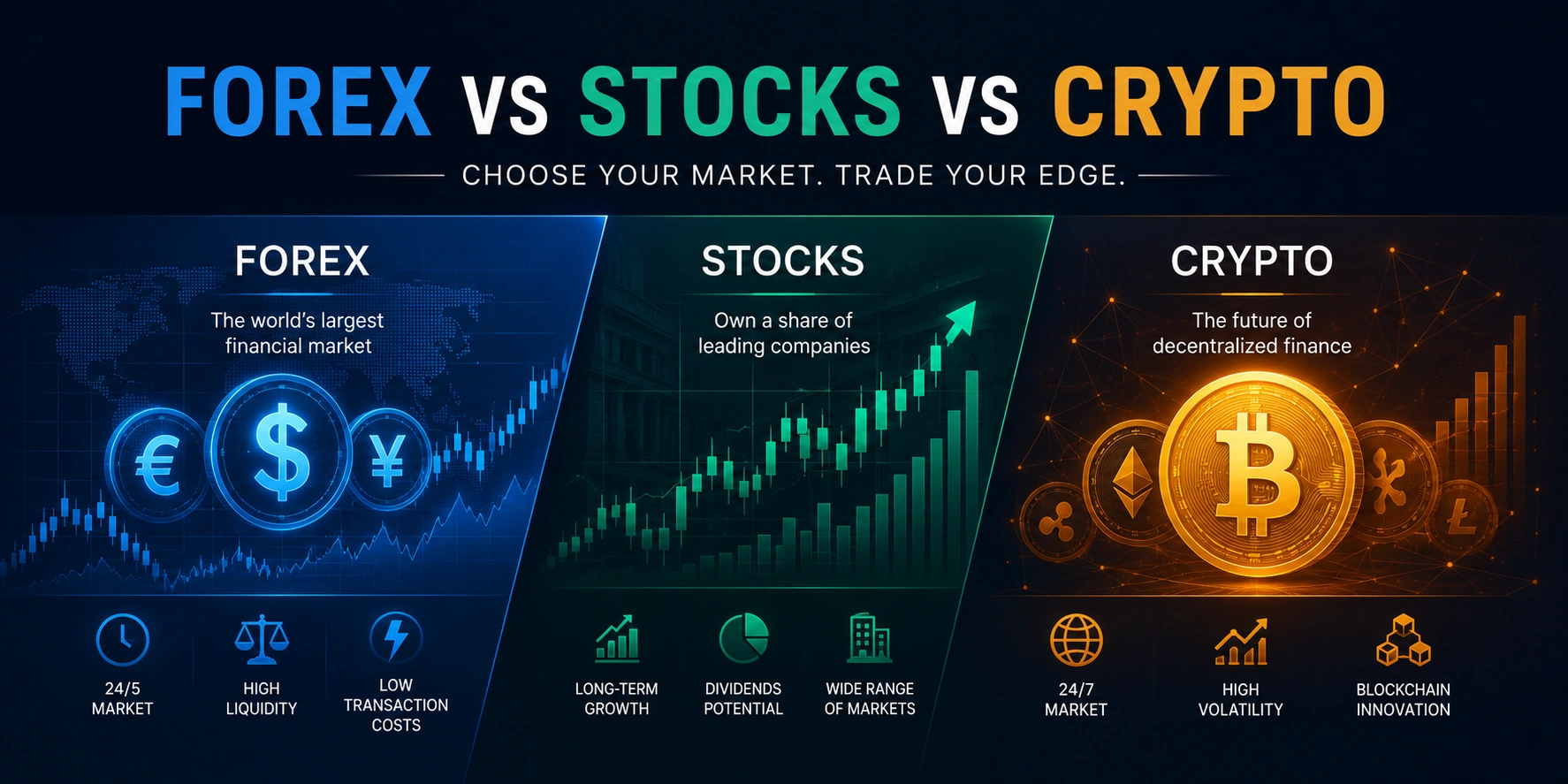
The term “Forex” is a blend of “foreign exchange.” The Forex market, also known as the FX market, is the largest and most liquid financial market in the world. What does that mean for you? It means there’s always a buyer for every seller and a seller for every buyer, which makes it incredibly easy to enter and exit trades.

  • Global and Decentralized: Unlike stock markets that have a central exchange (like the New York Stock Exchange), the Forex market is decentralized. Trades occur directly between two parties (over-the-counter or OTC) across a global network of banks, financial institutions, and individual traders.
  • Participants: Who trades Forex? Major banks, multinational corporations, hedge funds, central banks, and, increasingly, individual retail traders like you. Each participant has different reasons for being in the market, whether it’s facilitating international trade, hedging against currency risk, or speculating on price movements for profit.
  • 24/5 Operation: The Forex market is open 24 hours a day, five days a week, from Sunday evening EST to Friday evening EST. This is because it follows the sun, opening in Sydney, then Tokyo, London, and finally New York. This continuous operation offers immense flexibility for traders worldwide.

Understanding Currency Pairs: The Building Blocks of Forex Trading

You don’t just buy or sell a single currency in Forex; you always trade them in currency pairs. This is because the value of one currency is always expressed in relation to another. For example, when you see EUR/USD, you’re looking at the exchange rate between the Euro and the U.S. Dollar.

Every currency pair has two components:

  • Base Currency: This is the first currency in the pair. It’s the “basis” for the buy or sell. When you buy a pair, you’re buying the base currency. When you sell a pair, you’re selling the base currency.
  • Quote Currency (or Counter Currency): This is the second currency in the pair. It’s the currency used to “quote” the price of the base currency. For example, if EUR/USD is 1.10000, it means 1 Euro (base currency) is worth 1.10000 U.S. Dollars (quote currency).

Currency pairs are typically categorized:

  • Major Pairs: These include the most heavily traded currencies, always involving the U.S. Dollar. Examples: EUR/USD, USD/JPY, GBP/USD, AUD/USD. They offer the highest liquidity.
  • Minor Pairs (or Crosses): These pairs don’t include the U.S. Dollar but are still major currencies. Examples: EUR/GBP, GBP/JPY, AUD/NZD.
  • Exotic Pairs: These consist of one major currency and one currency from an emerging or smaller economy. Examples: USD/TRY (U.S. Dollar/Turkish Lira), EUR/MXN (Euro/Mexican Peso). They tend to have lower liquidity and higher volatility.

How You Make Money (or Lose It) in Forex Trading

The core principle of making money in Forex is simple: you buy a currency pair if you expect the base currency to strengthen against the quote currency, or you sell a currency pair if you expect the base currency to weaken against the quote currency.

Let’s say you believe the Euro will gain value against the U.S. Dollar. You would buy EUR/USD. If the price goes up, you profit. Conversely, if you think the Euro will lose value, you would sell EUR/USD. If the price goes down, you profit.

The Concept of Pips: What They Are and Why They Matter

Currency prices move in tiny increments called pips (percentage in point). A pip is usually the fourth decimal place in most currency pairs (e.g., 0.0001 for EUR/USD). For Japanese Yen pairs, it’s typically the second decimal place (e.g., 0.01 for USD/JPY).

Why do pips matter? Because they are how your profit or loss is calculated. Even though a pip is a small unit, when you trade large amounts of currency (which you can do thanks to leverage), each pip movement can result in significant monetary gains or losses.

Leverage: Magnifying Your Trading Power

One of the most appealing aspects of Forex for many traders is leverage. It allows you to control a large amount of currency with a relatively small amount of capital (your margin). For example, with 1:100 leverage, a $1,000 deposit could allow you to control $100,000 worth of currency.

While leverage can magnify your profits, it’s crucial to understand that it can also magnify your losses. It’s a double-edged sword that requires careful risk management. Don’t underestimate its power.

Example 1: Profiting from an Upward Move (Buying First)

Let’s walk through a practical example of how you might profit from a rising market.

  • Scenario: You believe the Euro will strengthen against the U.S. Dollar.
  • Action: You decide to buy EUR/USD.
  • Trade Details:
    • You open a position buying 1 standard lot of EUR/USD.
    • Your entry price (what you bought at) is 1.10000.
    • As the market moves, your prediction proves correct, and EUR/USD rises.
    • You decide to close your position (sell EUR/USD) at 1.10050.
  • Calculating Your Profit:
    • The price moved from 1.10000 to 1.10050. That’s a movement of 0.00050.
    • Since 1 pip is 0.00010, the movement is 0.00050 / 0.00010 = 50 pips.
    • For most major currency pairs with the USD as the quote currency, trading 1 standard lot (100,000 units) means each pip is worth approximately $10.
    • Your profit would be: 50 pips * $10/pip = $500.

In this example, your prediction was correct, and you generated a profit from the upward movement of the EUR/USD pair.

Example 2: Profiting from a Downward Move (Selling First)

What if you think a currency will fall? You can still profit by “selling first.” This is often called “going short.”

  • Scenario: You believe the Australian Dollar will weaken against the U.S. Dollar.
  • Action: You decide to sell AUD/USD.
  • Trade Details:
    • You open a position selling 1 standard lot of AUD/USD.
    • Your entry price (what you sold at) is 0.67500.
    • The market moves as you predicted, and AUD/USD falls.
    • You decide to close your position (buy AUD/USD back) at 0.67400.
  • Calculating Your Profit:
    • The price moved from 0.67500 to 0.67400. That’s a movement of 0.00100.
    • The movement is 0.00100 / 0.00010 = 100 pips.
    • Again, for AUD/USD with 1 standard lot, each pip is approximately $10.
    • Your profit would be: 100 pips * $10/pip = $1,000.

Here, you profited from a downward movement by selling the pair at a higher price and buying it back at a lower price. This “sell high, buy low” strategy is fundamental to trading both up and down markets.

Practical Tip: Why Practice is Key Before You Start Trading

Before you even think about putting real money into the Forex market, you absolutely must spend time on a demo account. Almost all Forex brokers offer free demo accounts that let you trade with virtual money in a real-time market environment. This is your risk-free sandbox to:

  • Familiarize yourself with the trading platform.
  • Practice placing trades (buy, sell, setting stop-losses and take-profits).
  • Test out trading strategies without losing real capital.
  • Understand how your emotions can affect your decision-making.

From my experience, jumping straight into live trading without this foundational practice is a recipe for quick losses. Take your time, learn the ropes, and build confidence in a simulated environment first.

Key Benefits of Trading Forex That You Should Know

Many traders are drawn to Forex for several compelling reasons:

  • High Liquidity: As the largest financial market, you’ll find it easy to enter and exit trades at fair prices.
  • 24/5 Market: The continuous market hours offer flexibility, allowing you to trade at times convenient for you, regardless of your time zone.
  • Accessibility: With relatively low capital requirements compared to other markets, Forex trading is accessible to a wide range of individuals.
  • Potential for Profit in Any Market: As shown in our examples, you can potentially profit whether the market is going up or down.

A Quick Summary of What You’ve Learned About Forex Trading

You’ve taken your first step into understanding the vast and dynamic world of Forex trading. You now know that it’s the global market for exchanging currencies, driven by buying and selling currency pairs like EUR/USD. You’ve seen how tiny price movements, measured in pips, can translate into significant gains or losses, especially with the use of leverage. Most importantly, you’ve grasped the crucial importance of starting with a demo account to practice and hone your skills. This is just the beginning of your educational journey, and there’s much more to learn, but you’ve built a solid foundation.